
The Raw Story of a Skate Legend’s Redemption
As told on the Dawgs Gone Wild podcast with Mike Barron and Jon Pena
Brandon Turner has lived a life of extreme highs and devastating lows. Known as a San Diego skateboarding legend, his story isn’t just about technical tricks; it’s a powerful narrative of addiction and redemption.
Watch the full interview here: Brandon Turner’s Story
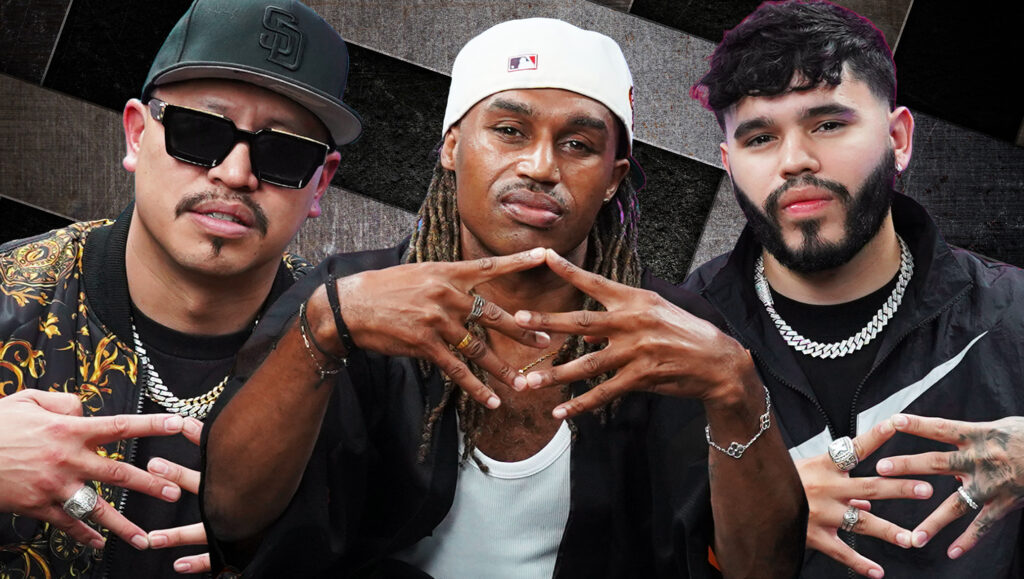
There are interviews that entertain, and then there are interviews that stay with you. The latest episode of Dawgs Gone Wild, hosted by San Diego’s own Mike Barron alongside co-host Jon Pena, delivered something rare, a conversation that felt less like a podcast and more like a front-row seat to a man’s entire life. Their guest: Brandon Turner, professional skateboarder, San Diego legend, and founder of Westside Recovery.
From the moment Mike Barron introduced Brandon Turner, calling him without hesitation “a legend… someone who’s been pushing the culture for possibly three decades,” it was clear this wasn’t going to be your average sit-down.
A Six-Year-Old on a Plane, and a World Turned Upside Down
Brandon Turner didn’t ease into his story. When Mike Barron and Jon Pena asked him to take them back to the beginning, Brandon Turner went all the way.
Growing up in a large family with six brothers and sisters, Brandon Turner was the baby. But at six years old, everything he thought he knew was shattered mid-flight. His father, a military man stationed overseas after the Gulf War, was relocating the family to Japan. As the plane took off, a woman at the airport screamed out that Brandon Turner was her son. On that flight, Brandon Turner discovered that the people he called his brothers and sisters were actually his aunts and uncles. The woman who raised him as her son was actually his grandmother. And his favorite “sister,” the one sobbing at the airport, was his biological mother.
“My whole family is lying to me,” Brandon Turner told Mike Barron and Jon Pena, recalling how he processed it as a child. “I just internalized it and thought, ‘Forget everybody.'”
Landing in Japan, a country he initially kept calling China, Brandon Turner was completely unmoored. No internet. No familiar faces. A language he didn’t speak. A reality he no longer recognized. He was six years old.
The Board That Saved Him
Long before Japan, before the revelations, before the chaos, there was skateboarding. Brandon Turner’s relationship with the sport started at age two, when a surfer named Manny Annayia used to skate past his house daily. The little kid in diapers would bolt outside just to watch.
“He put me on the board one day,” Brandon Turner said with a grin. “That was it.”
In Japan, that board became his lifeline. Mike Barron, who grew up in the same San Diego neighborhood as Brandon Turner, summed it up perfectly: “Skateboarding was your outlet.” And it was. In a country where he understood nothing, on a board he understood everything. Brandon Turner poured his pain, his anger, and his drive into skating, and the result was a level of fearlessness that would define his career.
“I didn’t have fear of skateboarding because I felt like I’d already been through so much pain,” Brandon Turner told Jon Pena and Mike Barron. “I thought, I’m going to become a professional skateboarder, get rich, and show them all.”
He was a child when he made that vow. He kept it.
Going Pro: From Claremont to Shorties
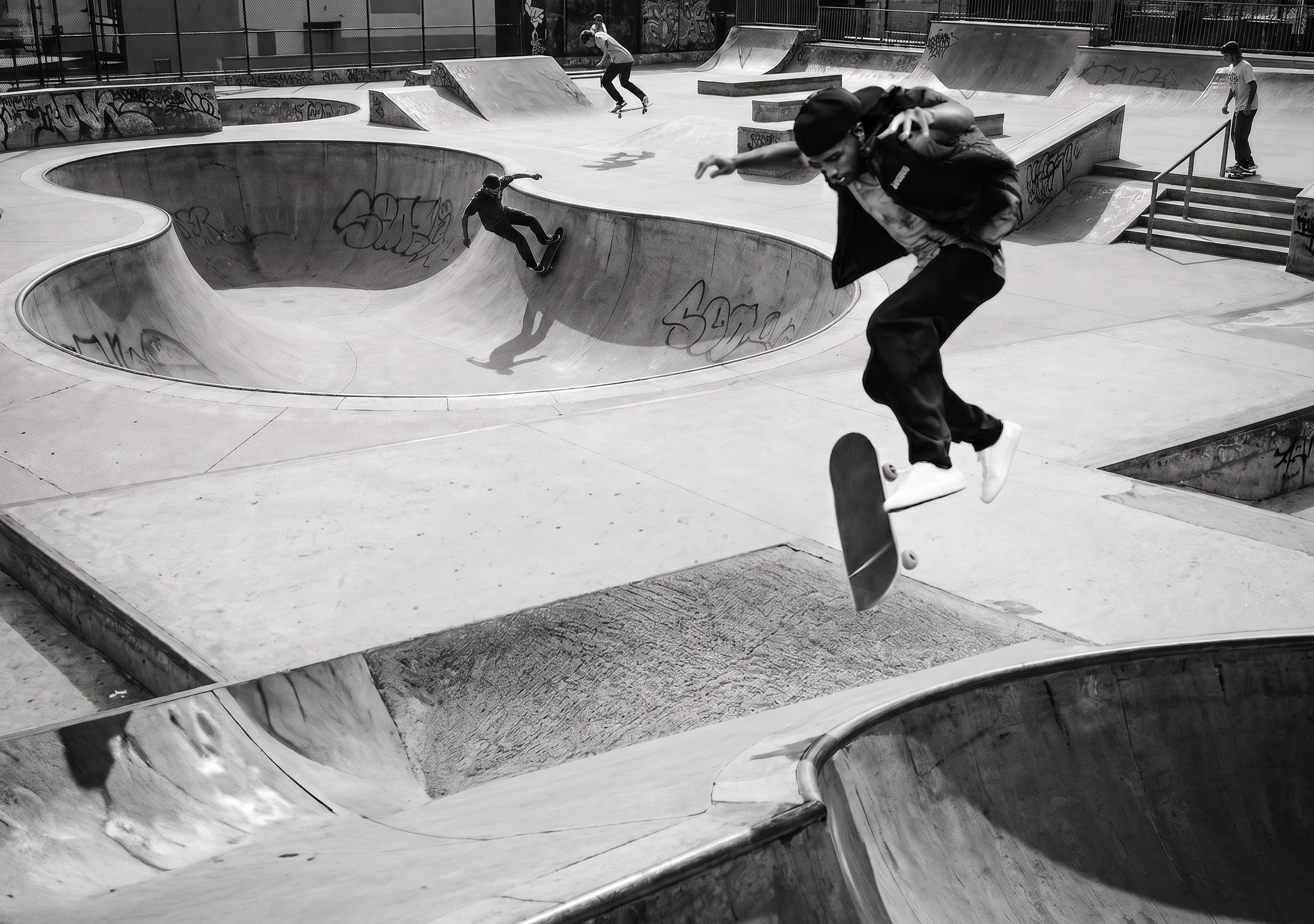
When Brandon Turner returned to San Diego at 12 or 13, he wasn’t starting from scratch. He was arriving ready. The Japanese skateboarding culture had sharpened him into something exceptional: disciplined, fearless, technically precise.
He sought out Peter Smolick, the best skater in Claremont at the time, by skating directly to his house and knocking on the door. No manager. No agent. Just a kid with a board and a plan.
That connection led to amateur status at 13. And it wasn’t long before Chad Muska, already a skateboarding icon, came calling. Muska invited Brandon Turner to join Shorties, one of the most iconic skate labels of the late ’90s. Mike Barron and Jon Pena lit up at the mention of it.
“Jon Pena, these are like royalty in the whole skateboarding world,” Mike Barron said, barely containing himself.
Brandon Turner turned pro at 18. He toured the world. He got shoe deals with Osiris. He landed in the New York Times, People Magazine, Men’s Health, and NBC 7. He was making six figures a month skating. The kid from Japan who had nothing had absolutely everything.
When Everything Falls Apart
But Brandon Turner didn’t shy away from the harder chapters, and Mike Barron and Jon Pena gave him the space to tell the full truth.
The money. The tours. The parties. The rock-star lifestyle. All of it masked something Brandon Turner had never actually dealt with, the trauma of a six-year-old boy who found out his entire family was a lie at 30,000 feet.
“We had this stigma growing up, being a man means you don’t get help,” Brandon Turner told Jon Pena. “That was seen as weak.”
So instead, it came out sideways. Through alcohol. Through reckless behavior. Through DUIs, public intoxication, a stint in county jail, and ultimately a year and a half in prison. Brandon Turner was at rock bottom.
What changed things wasn’t a program or a pamphlet. It was a man, someone who had been through worse, who sat Brandon Turner down and put him up on game. Taught him to look at his resentments honestly. Taught him to take his own inventory. Taught him, essentially, to be his own therapist.
“I was so stubborn,” Brandon Turner admitted. “But once I got that, I knew I had to give back.”
Westside Recovery: Purpose in Action
In 2016, Brandon Turner got sober. He found his way back to the board. And he started building something bigger than himself: Westside Recovery, a San Diego-based treatment center that offers medically supervised detox, partial hospitalization, intensive outpatient programs, and sober living, with surfing, skateboarding, and Pilates woven into the healing process.
Mike Barron broke it down for listeners: “Brandon Turner is using his platform and his experience to help people who are going through exactly what he went through.”
Brandon Turner was clear about something many people don’t know: quitting alcohol or benzodiazepines cold turkey can trigger seizures and be fatal. Medical detox is step one. But it’s what comes after, the group therapy, the one-on-one sessions, the accountability, the community, that actually rebuilds a life.
Jon Pena asked about transformation stories. Brandon Turner didn’t hesitate. Graduates of the program who had lost everything, family, home, livelihood, have gotten it all back. Jon Pena pressed further: “How does that make you feel?”
“I feel just as good as they feel,” Brandon Turner said. “That’s the power of helping others. That’s what we’re meant for, connection.”
Mike Barron, never one to let a real moment slide by, put it simply: “God put you here for that.”
Skate Mafia and the Culture That Never Stopped
Even with Westside Recovery growing, Brandon Turner never stepped off the board. He’s a core part of Skate Mafia, the brand he helped build alongside Peter Smolick after leaving Shorties, and they’re currently working on a new promo, a full video next year, and a solo part from Brandon Turner himself.
But Skate Mafia was always meant to be more than a skate brand, Brandon Turner explained to Mike Barron and Jon Pena. The idea was a culture, open to skaters, artists, musicians, and anyone who genuinely connects with the spirit of it.
“If you skate, or if you’re part of the art, the music, the fashion, you are Skate Mafia,” Brandon Turner said. “Anywhere we go in the world, we got plugs. You need a place to stay, a tour guide, whatever, let me make a call.”
The Tricks That Defined a Career
Of course, Mike Barron wouldn’t let Brandon Turner leave without going there. The tricks. The moments. The stuff of legend.
Two stand out above the rest.
The first: a switch hard flip over the Carlsbad Gap, a legendary spot that no longer exists, captured on film for Brandon Turner’s Shorties part. Mid-run, he hit a crack in the pavement. He let out an audible “oh sh*t.” Then landed it perfectly. The crowd lost their minds.
The second came nearly 20 years later. In 2020, at 39 years old, Brandon Turner went to San Francisco’s Wallenberg, one of skateboarding’s most infamous and demanding gaps, and pulled off a trick he had been envisioning since he was 18. He meditated on it for a full week beforehand, visualizing the landing in detail. When he rolled away clean, his whole team swarmed him.
That trick won Street League’s Trick of the Year.
“People were like, ‘You’re 39, what are you talking about?'” Brandon Turner laughed, with Mike Barron and Jon Pena shaking their heads in disbelief. “But I already knew I was going to land it. I had seen it.”
The Mount Rushmore of Skating
Before they wrapped, Mike Barron and Jon Pena asked Brandon Turner the question every skate fan wants answered: Mount Rushmore. Four names. No debate.
Brandon Turner didn’t blink: Tom Penny. Peter Smolick. Kareem Campbell. And Danny Way, the man who, on a skateboard, cleared the Great Wall of China.
“That’s a wrap,” Mike Barron said. “That’s all I need to know.”
Final Words from Brandon Turner
As the episode closed, Brandon Turner left the Dawgs Gone Wild audience with something that cut through all the noise:
“Don’t believe the stigma that getting help is weakness. It’s not. We all need help. The only thing you can do alone is use the bathroom, and eventually you might need help with that, too.”
Not everyone is ready for six figures. Are you?
Growth is uncomfortable. It requires better systems, better strategy, and better execution. Master the specific 100K Sales Program architecture designed to take you from grinding to growing and see the logic we use to turn small brands into six-figure blueprints.
Don’t just learn the theory and watch the application. Follow Mike Barron for the behind-the-scenes insights and high-level strategy shifts happening right now.
Stop watching from the sidelines. Mike is dropping the raw execution tactics on social media right now. Get in the game.