
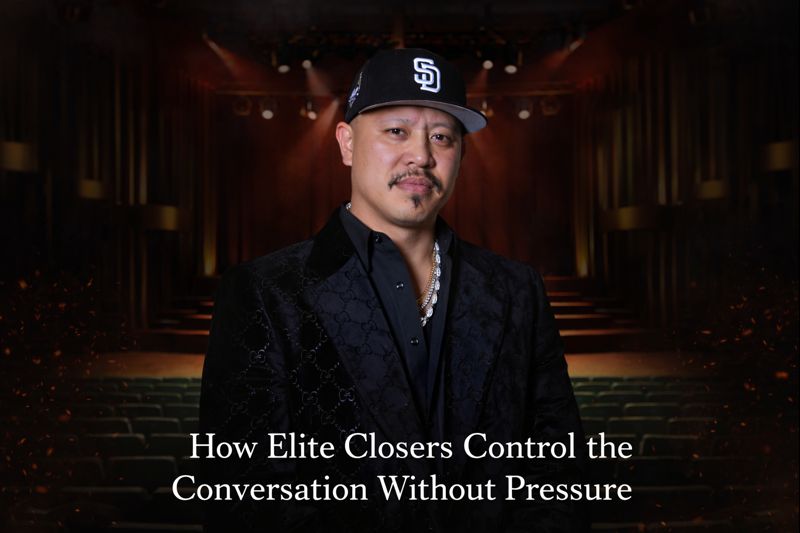
High-ticket sales are not about talking more, pushing harder, or sounding more persuasive. They are about leadership. This is a principle Mike Barron consistently reinforces: true control in a sales conversation does not come from dominance, urgency, or force. It comes from calm authority and intentional guidance.
Pressure enters the moment a prospect feels rushed, cornered, or subtly steered toward a decision they do not fully understand. Even when the language sounds professional, pressure is felt emotionally. Control feels different. It feels grounded, steady, and respectful. When control is present, the prospect does not feel managed or manipulated. They feel led.
Elite closers understand that leadership in conversation creates momentum without resistance. The goal is not to push someone forward, but to remove the friction that keeps them stuck.
Control Starts With Presence
One of the core ideas Mike Barron teaches is that elite closers are fully present in the conversation. Presence is not passive listening. It is intentional attention.
Elite closers are not thinking about the next objection. They are not mentally jumping ahead to the close. They are not distracted by outcomes, commissions, or timelines. Their focus is entirely on understanding the person in front of them.
Presence creates safety. When a prospect feels genuinely heard, their nervous system settles. They stop guarding their words. They begin to share what actually matters to them. This openness is what allows the conversation to move forward naturally.
Control begins the moment the prospect realizes they are not being sold to, but guided through a thoughtful decision.
Asking Better Questions Creates Authority
According to Mike Barron, authority in sales does not come from having the best answers. It comes from asking the right questions at the right time.
Elite closers use questions to slow the conversation down and bring clarity to the surface. These questions uncover motivation, hesitation, and emotional drivers that often remain unspoken. Instead of explaining more, they explore deeper.
When a closer asks thoughtful questions, the prospect does most of the talking. This shifts the power dynamic without force. The conversation becomes collaborative rather than transactional, and trust builds naturally.
The person asking the questions controls the direction of the conversation, not by overpowering it, but by guiding it.
Silence Is a Leadership Tool
Mike Barron often points out that most salespeople are uncomfortable with silence. They rush to fill gaps with explanations, reassurance, or additional details because silence feels like loss of control.
Elite closers understand that silence is not a gap. It is a tool.
Silence gives the prospect space to think and process. It signals confidence and patience. It shows that the closer is not desperate for a response or outcome.
When silence is used intentionally, prospects often clarify their own thoughts out loud. They move themselves closer to a decision without being pushed. Silence removes pressure while preserving leadership.
Emotional Regulation Keeps Conversations Grounded
High-ticket conversations naturally bring emotions to the surface. Excitement, fear, doubt, and hesitation all show up when meaningful decisions are being considered.
A key principle in Mike Barron’s approach is emotional regulation. Elite closers remain steady regardless of what arises in the conversation. They do not react defensively to objections. They do not become overly enthusiastic when interest increases. They stay grounded throughout the process.
This emotional steadiness keeps the conversation stable. Prospects mirror that calm and feel safe continuing. When emotions are controlled, trust grows and resistance softens.
Framing Without Forcing
Rather than pushing prospects toward a yes, Mike Barron teaches closers to frame decisions clearly and honestly.
Framing means helping the prospect fully understand their situation by exploring consequences, trade-offs, and future outcomes. This often includes discussing the cost of staying stuck, the impact of delay, and the long-term effects of taking or avoiding action.
When framed correctly, the decision becomes obvious to the prospect without pressure being applied. The closer is not persuading. They are clarifying.
Clarity removes confusion, and confusion is the root of most resistance.
Detachment From the Outcome Builds Trust
One of the strongest ways elite closers maintain control is through genuine detachment from the outcome. Mike Barron emphasizes that elite closers are willing to walk away if it is not the right fit.
This detachment removes desperation from the conversation. Prospects feel it immediately. When there is no pressure to close at all costs, trust increases and honesty emerges.
Paradoxically, this willingness to walk away often leads to more closes, not fewer.
Leading With Clarity Instead of Persuasion
Elite closers do not persuade. They clarify. They reflect what they hear, summarize what matters, and confirm alignment before moving forward.
Mike Barron teaches that clarity dissolves resistance. When confusion disappears, decisions feel easier and safer. Prospects want guidance, not pressure.
When the path is clear, commitment follows naturally.
Control Feels Like Respect
True conversational control never feels manipulative. It feels respectful.
Prospects feel seen, heard, and supported in making the right decision for themselves. That is why elite closers rarely encounter hard resistance. Leadership replaces pressure.
Pressure creates compliance. Leadership creates commitment. As Mike Barron teaches, commitment is what closes high-ticket deals without force.
Add the 100k sales program