
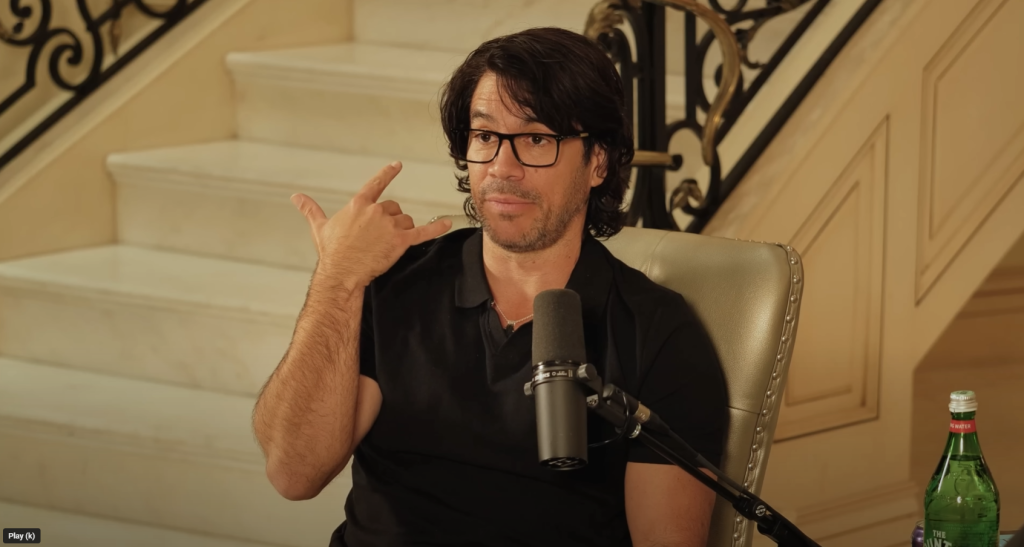
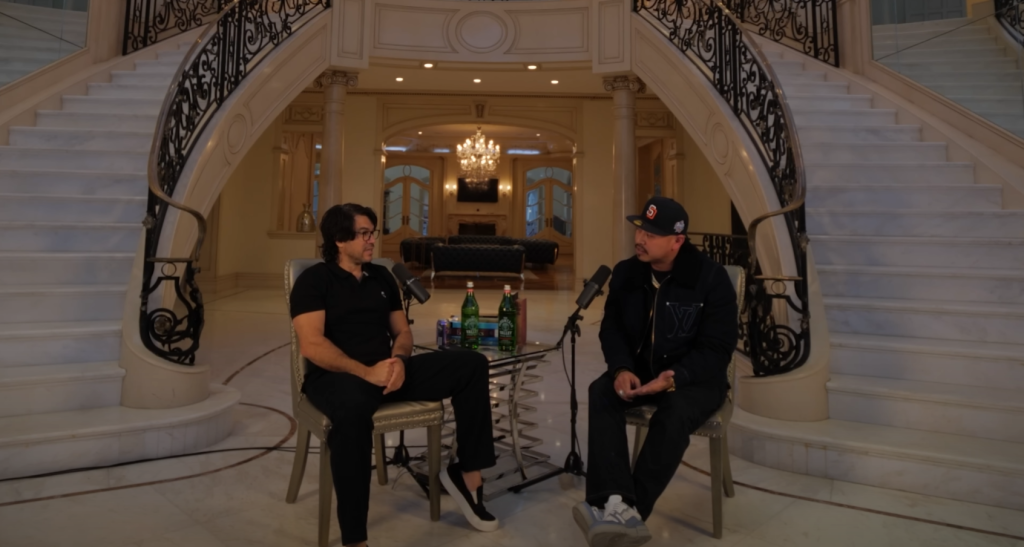
The moment Mike Barron walks into the conversation with Tai Lopez, you can tell this isn’t going to be a sterile debate over scripts and rebuttals. It’s louder, more human, more kinetic than that—closer to a locker room before a championship game than a seminar hall. The Tai Lopez and Mike Barron podcast feels like a window into two people who have both spent years in the trenches of sales and have the scars, stories, and receipts to prove it.
Mike’s philosophy lands early and hard: sales is energy transfer. If you carry conviction that your offer changes lives, the job is to move that certainty from your body into someone else’s decision. Techniques matter, but conviction is the engine. Lopez agrees, framing it like a fight. In boxing, the right cross wins most battles. In sales, the “right cross” is belief delivered clearly—no flinch, no wasted motion. Hooks and jabs (follow-up, objection handling, clever frameworks) set it up, but certainty is the punch that ends the round.
That word—certainty—comes up again and again, but never as an empty slogan. It’s tied to proof, to being a product of the product, to the kind of reps that harden your voice and steady your breathing when the stakes rise. It’s the difference between reciting and leading. And leadership is what both men are really talking about, whether the setting is a phone call, a Zoom room, or a stage thick with hot lights.

Mindset First, Mechanics Second
Most sales content starts with tactics: the right opener, the perfect discovery question, a list of objection counterpunches. Barron flips the order. He trains mechanics, but he begins with identity—who you are when you sell. He’s seen it too often: two people take the same course, hear the same lectures, write the same notes; one becomes a seven-figure earner, the other fizzles. The variable isn’t information. It’s identity and environment.
Mike runs his team like a dojo. There’s a culture of noise and pressure, yes, but also clarity. Standards aren’t negotiable; feedback is close to the action. People grow fast because cause and effect is immediate. Lopez adds language for it borrowed from jiu-jitsu: belts, levels, earned status. In that framing, sales is a martial art. You train, you spar, you fail in public, you get better, and you keep climbing. It’s not glamorous; it’s durable.
If you’ve ever built a team, you know how rare that is. Most organizations tick boxes: LMS modules, a few shadow calls, a manager who’s too busy to coach. Mike insists on a different rhythm. There’s theory, yes—but then daily drilling, supervised mock calls, a practical exam that actually means something, and a quality-control gatekeeper who is paid to say “not yet.” The certifications he cares about are the ones where a rep can perform when the bell rings.
Why the Setter-Closer System Wins (Most of the Time)
Lopez and Barron take on a question that never seems to die: one-call, full-cycle selling, or the setter-closer split? Mike’s answer is pragmatic. Keep your closers closing. If a closer spends half the day dialing, rescheduling, and chasing, throughput collapses. In Mike’s world, a healthy pod looks like four setters feeding one closer. The setters qualify, warm, and book. The closer stacks demos back-to-back through the day and lives where outcomes happen.
None of this demotes setters. In Mikes’s shop, setter is a ramp lane, not a cul-de-sac. You get roughly three months to grow into a closer or you find a better fit elsewhere. That pressure sounds harsh until you see the ladder: setter → closer → pod lead. The entire structure rewards velocity, learning, and the willingness to be coached in public.
Lopez plays the reasonable contrarian. There are moments, he says, when full-cycle is the smarter choice—when a scarce, high-authority buyer finally raises a hand and time kills deals. Great closers should be able to recognize those moments and finish the sale in one motion. That’s the mark of an organization that runs on judgment, not just rules. But as a baseline, the split model is a machine. It’s discipline by design.
How You Think, What You Do
The most revealing passages of the conversation are not about scripts at all. They’re about the kind of person who succeeds in high-ticket arenas. Discipline. High standards for communication. Calendars that don’t lie. Mike tells stories of career-changers—construction workers, baristas, former rappers—who step into this culture and reshape their incomes by reshaping themselves. Lopez nods. He’s watched the same arc play out for twenty years: when identity changes, behavior follows; when behavior compounds, outcomes shift.
There’s a practical plan implied here, simple but hard to fake:
- Write a one-minute certainty script: the problem you solve, the promise you can keep, the proof in numbers, and the path you’ll lead a buyer down.
- Create a daily ritual of role-play. Not once a week, not when convenient. Daily. Pressure on. Calls recorded.
- Grade actual calls with a tight rubric. Choose one behavior to improve each week and hammer it.
- Publish a live scoreboard. Celebrate behaviors as loudly as wins so people know what to repeat.
No one on this podcast romanticizes the grind. They respect it. The reps that matter aren’t Instagram highlights. They’re the quiet hours when you turn uncertainty into sentences that land.
Stage, Screen, Phone
There’s also a practical taxonomy of selling arenas. Tai and Mike agree that Russell Brunson is an all-timer from the stage—timing, arcs, stacked offers, and the ability to move an entire room toward a decision without ever feeling slippery. On the page (or in long-form VSL), the masters are often invisible to the public: copywriters who obsess over a single offer for a year and then quietly sell a million a day. Phone and Zoom are where most high-ticket businesses actually live, and where most businesses should master first. You don’t need a stadium; you need the spine to deliver certainty, rep after rep, call after call.
Pick a lane. If you run a coaching or consulting company and you’re not north of mid-six figures a month, start with phone and Zoom. Build the setter-closer spine, perfect your certainty script, and let the stage come later. And when the stage finally does arrive, you’ll carry the kind of proof that makes stories land because they’re true.
Culture, Consequences, and Growing Adults
The conversation veers into culture and parenting, and if you listen closely, it’s not a tangent. Both men return to an unfashionable idea: consequences should be close to actions. In families, in teams, and on sales floors, delayed feedback breeds confusion. Immediate, fair, visible feedback builds adults. That’s what Mike is after in his organization—grownups who can take a punch, correct, and move forward.
It’s a useful lens for any leader: how close is feedback to the event? How visible are the standards? How loudly do we celebrate behaviors, not just outcomes? How clear is the ladder? These are cultural questions masquerading as training issues.
Proof of Work
The Tai Lopez and Mike Barron podcast doesn’t just trade slogans about mindset; it links mindset to receipts. Mike talks openly about comp structures (he’ll pay setters and closers the same 10% on the right deal and let throughput sort out the totals), about pods and ratios, about hiring only from his academy so belief is baked in. Lopez adds his own data from twenty years of selling and building, reminding us that almost everything worth learning in business eventually reduces to simple things done with unreasonable consistency.
If you listen closely, you’ll hear an invitation: stop chasing novelty and turn pro at the boring fundamentals that never stop working.
What to Do This Month
Let’s make it concrete. Over the next 30 days, do three things:
- Codify your certainty. Write and memorize your 90-second right cross. Record it until your eyes are calm and your voice carries weight without volume.
- Pilot a setter-closer pod. Two setters, one closer. Measure show rate, close rate, and revenue per rep hour. Adjust the script, not the standard.
- Install real QC. Pick ten percent of calls each week. Grade with a pass/fail rubric tied to promotion and pay. Only coach one behavior at a time. Then do it again next week.
Do that for a month and you’ll feel the difference. Do it for a quarter and your pipeline will start to look like a system instead of a storm. Do it for a year and you won’t recognize your team.
The Last Word
In the end, the conversation circles back to the simplest possible formula. The difference between top-tier closers and the pack? How you think and what you do. That’s it. Identity and action. Belief and behavior. If that sounds too simple, it’s because the work is in living it long enough for compounding to kick in. Lopez and Mike don’t pretend otherwise; they just show you what it looks like when you commit.
If you’re a founder, operator, or rep who wants to stop collecting tactics and start building a career, this episode is a masterclass with dust on it. It’s not theoretical. It’s the playbook both men actually run.
Watch the full conversation and feel the conviction for yourself:
👉 Listen to the Tai Lopez & Mike Barron podcast